Igantzi
Ofrenda a la tormentaIgantzi is a key investigative location in the inquiry into suspicious infant deaths and missing bodies. A bereaved mother’s family tomb there is opened under the pretext of repairs, and the child is found to be absent. That discovery changes the investigation from a pattern inferred from maps and family histories into a case supported by direct physical evidence, while tying Igantzi to a network of families connected to Doctor Berasategui’s bereavement group and the lawyers Lejarreta y Andía.
The Igantzi family and the child’s death
The case centers on a woman from Igantzi whose daughter died at one month old. The child had not been baptized and was buried in a family tomb the mother had inherited. After the death, the woman’s husband, an architect, did well financially, remarried, and had two children. The woman believed he had left her because she refused to have another child after their baby died. Her account gives the case a domestic history shaped by bereavement, pressure over another pregnancy, and a marriage that ended in divorce; it also presents a family in which the child’s death was followed by sharply different lives for the parents.
The woman gave birth at the Río Bidasoa clinic while Nurse Hidalgo worked there, although she did not remember Hidalgo. This detail placed the Igantzi child within the same institutional setting being examined in the wider inquiry. It did not by itself establish a connection between the nurse and the death, but it added a concrete point for investigators to check against other cases and the families’ histories.
The cemetery and the missing body
The mother cooperated with the investigation and accompanied the police to the cemetery. She agreed to the opening of her family tomb, and the request was arranged for the following day. The cemetery’s approach is described through steep steps and a narrow path crowded by thick shrubs, leading to a small chapel. When the police returned, a high-end four-wheel-drive vehicle stopped behind their car at the cemetery entrance. Two men and a woman sheltered beneath umbrellas by the chapel; Amaia Salazar signaled Fermín Montes to go toward them while she moved back to her own vehicle. Yolanda Berrueta then lowered the window of her car, unexpectedly appearing at the scene.
The opening was conducted on the basis of repairs to the tomb, rather than an ordinary judicial authorization to inspect remains. The mother owned the pantheon, and the proposed work provided a way to proceed without an immediate formal order. When the tomb was opened, the child’s body was not there. Amaia told Judge Markina that someone had taken it, apparently soon after the death. The child’s absence supplied the decisive finding: the suspicion that a grave had been emptied was no longer only an inference from a grieving parent’s doubts or a geographical pattern.
From a local case to a regional pattern
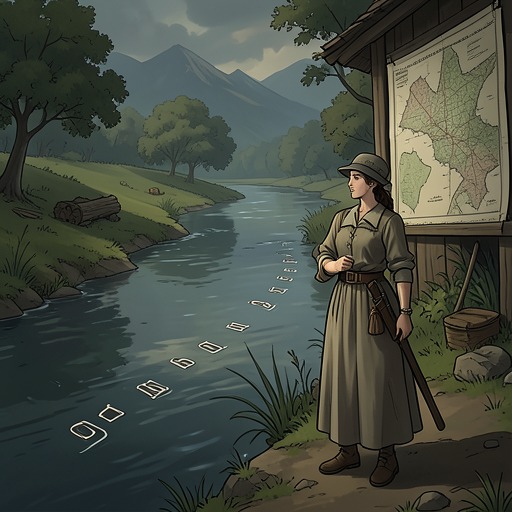
The Igantzi discovery entered an investigation increasingly organized around maps. Amaia plotted the addresses of babies who had died in suspected sudden infant-death cases and compared them with other deaths, including her own twin sister’s. On one map she excluded Ainhoa; on another, the points formed a line that followed the blue course of the Baztán River. The mapped sequence ran from Erratzu through Elbete and Elizondo, then toward Oieregi. This was not presented as proof that the river caused the deaths. Rather, its visible course gave the investigators a way to recognize a spatial pattern and ask whether the cases belonged together.
The larger mapping effort widened the scope beyond the initially investigated families. Research into baptismal records reduced some possibilities, while a search for cases in settlements bordering the river identified deaths in Elizondo, Oronoz-Mugaire, Narbarte, Doneztebe, and Hondarribia. Older cases were then added in another color, including the child associated with Argi Beltz, Amaia’s sister, the girl from Lesaka, and the daughter of the Lejarreta y Andía lawyers in Elbete. The resulting line followed the waterway from its source to its mouth, where it took the name Bidasoa. Igantzi’s missing child became especially significant within this expanding inquiry because the local grave provided physical confirmation of a disappearance that the map alone could not establish.
Family connections and investigative consequences
The Igantzi mother’s former husband was away on a business trip when the police sought to question him. He had learned about planned repairs to the family tomb the previous day through a cousin who worked for the town council. That coincidence complicated the intended inquiry: the person investigators wanted to question was unavailable just as the tomb was being opened. The available evidence did not establish why he had travelled, but the timing became part of the circumstances Amaia had to report and pursue.
Amaia later explained the discovery to Markina. She said the Igantzi mother owned the tomb and that the opening had been arranged under the claim of repairs; the body was missing, and investigators believed it had been removed shortly after the child died. She also reported that the father was abroad and that both he and a man connected to a further suspected case in Hondarribia had business ties to Lejarreta y Andía and to Berasategui’s bereavement group. With another suspected case in the same town and two more in Navarre, she argued that a formal investigation was warranted. If the Hondarribia tomb also proved empty, the evidence could amount to three grave desecrations and body thefts linked to the same group. The Igantzi finding thus made the possibility of a connected operation harder to dismiss and raised the prospect that Markina’s father would be implicated in the inquiry.
Narrative significance
Igantzi’s importance rests on the contrast between a map’s suggestive marks and an opened tomb’s stark result. The map points investigators toward a pattern; the missing child supplies a material fact that can be investigated, compared, and connected to people and institutions. At the cemetery, a family burial place ceases to function as a secure boundary between the living and the dead: the absence inside it becomes evidence of an intrusion that may have occurred soon after the child’s death. The case also shifts the investigation’s stakes. A suspected sequence of infant deaths becomes a suspected sequence of removals, while family grief, professional associations, and the possibility of deliberate concealment converge around a single grave in Igantzi.